CHEM 1211 ACS final review

General Chemistry I · First-term ACS exam

Seventy questions. No surprises.

A review book I wrote for the ACS first-term general chemistry final in UGA CHEM 1211: concept review, worked examples and four practice sets for each of nine chapters, the data sheet, and a full-length mock exam with a score guide. You read it page by page in the Library or request a PDF copy, and you can take the practice sets and the mock exam there, timed and marked.

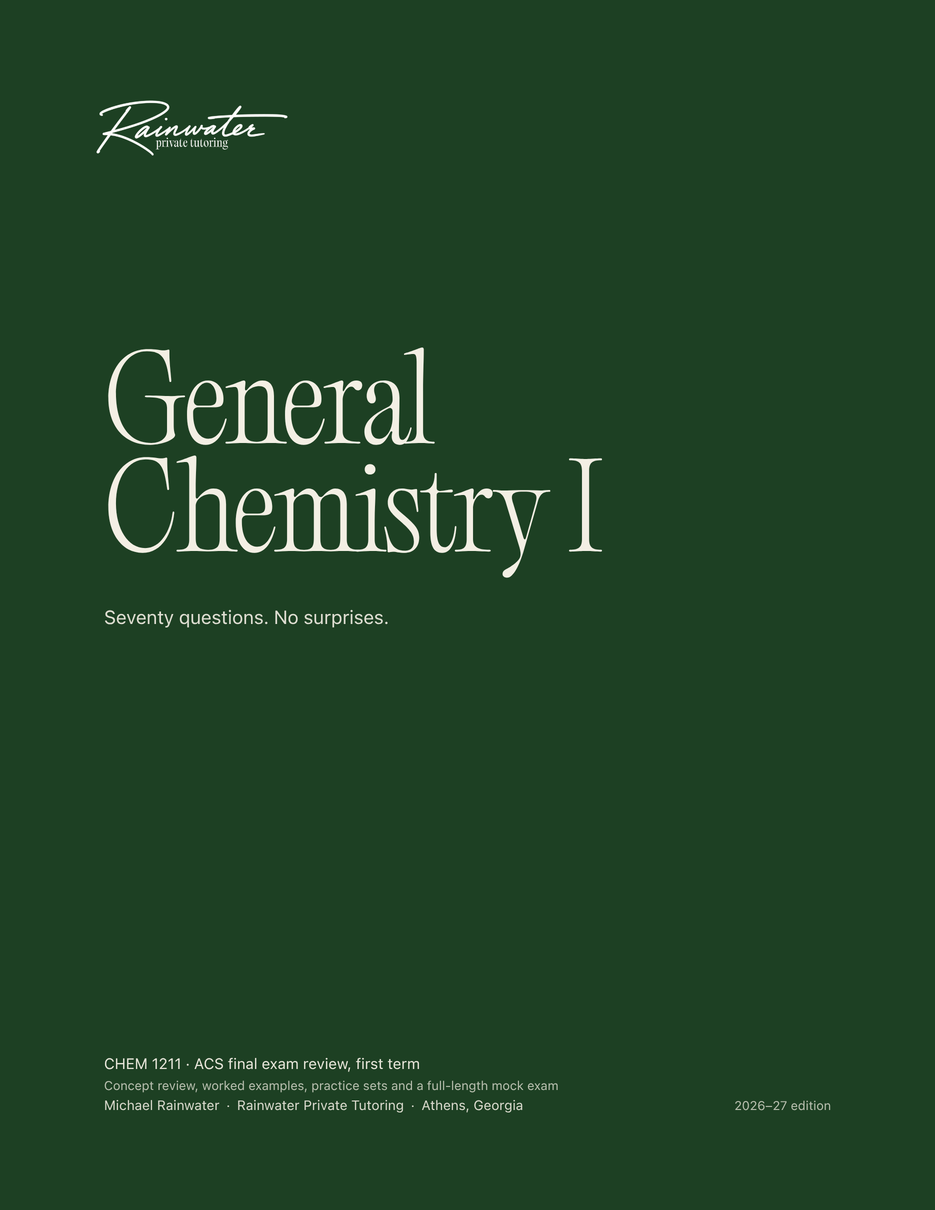
Cover of the General Chemistry I ACS review packet
70multiple-choice questions
110minutes, no writing in the booklet
9chapters, each with four practice sets
1full-length mock exam with a score guide

Where the seventy questions come from

Each dot is one question on the mock exam, grouped by chapter. Pick a chapter to jump to it.

  1. 1Foundations5 of 70
  2. 2Atoms, Molecules and Ions7 of 70
  3. 3Electronic Structure9 of 70
  4. 4The Mole and Chemical Formulas8 of 70
  5. 5Stoichiometry8 of 70
  6. 6Solutions and Aqueous Reactions9 of 70
  7. 7Heat and Enthalpy8 of 70
  8. 8Structure and Bonding10 of 70
  9. 9States of Matter6 of 70

Three moves for every question

Many points on this exam go to a right answer for a nearby question. Every worked example in the book runs the same three moves.

  1. Name what is asked.

    Catches answering a nearby question: the wrong ion, the wrong geometry, the surroundings in place of the system.

  2. Write the relationship before the numbers.

    Catches reaching for a formula that does not fit the question.

  3. Check the answer against the question.

    Catches a wrong sign, wrong units, or a value for the wrong object.

The chapters

The chapters follow the order of the exam. Chapter 1 is free to read in full, with its practice sets and letter answers. Each of the others opens a four-page sample: the first three pages and a page of its first practice set.

Foundations

In 1999 NASA lost the Mars Climate Orbiter, a $125 million spacecraft, because one team reported thruster data in pound-force seconds and the other read the numbers as newton-seconds. Nobody got the physics wrong; somebody dropped the units.

  • 1.1Significant Figures
  • 1.2Scientific Notation and Unit Conversions
  • 1.3Density and Temperature
  • 1.4Matter and Its Properties
  • 1.5Naming Compounds
  • 1.6The Exam Data Sheet
  • 1.7Choosing the Method
5 of 70 questionsKotz Ch. 1Four practice sets
Read Chapter 1 free PDF · 20 pages
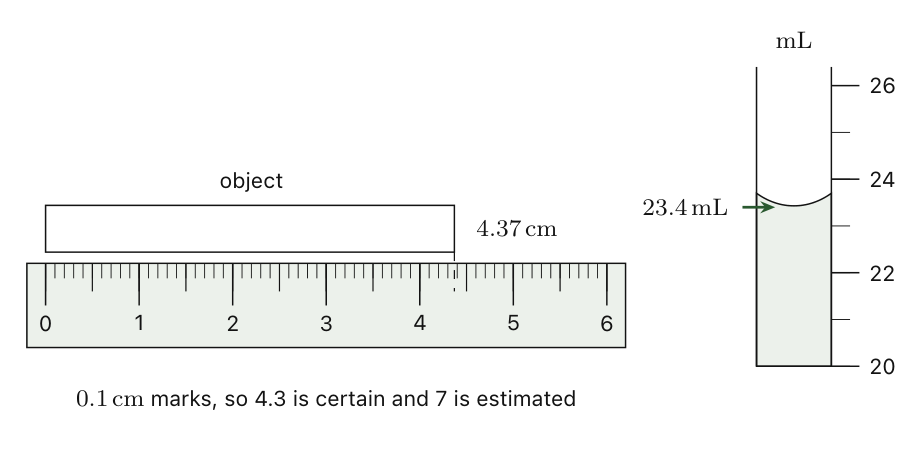
Reading a scale and a meniscus, from Chapter 1
Reading a scale and a meniscus

Atoms, Molecules and Ions

If an atom were the size of a football stadium, the nucleus would be a peppercorn at midfield, and it would hold nearly all of the mass. The rest is empty space with electrons in it.

  • 2.1Dalton and the Laws of Mass
  • 2.2The Nuclear Atom
  • 2.3Atomic Number, Mass Number and Symbols
  • 2.4Isotopes and Average Atomic Mass
  • 2.5The Periodic Table
  • 2.6Ions, Molecules and Ionic Formulas
  • 2.7Choosing the Method
7 of 70 questionsKotz Ch. 2Four practice sets
Preview Chapter 2 PDF · 4 pages
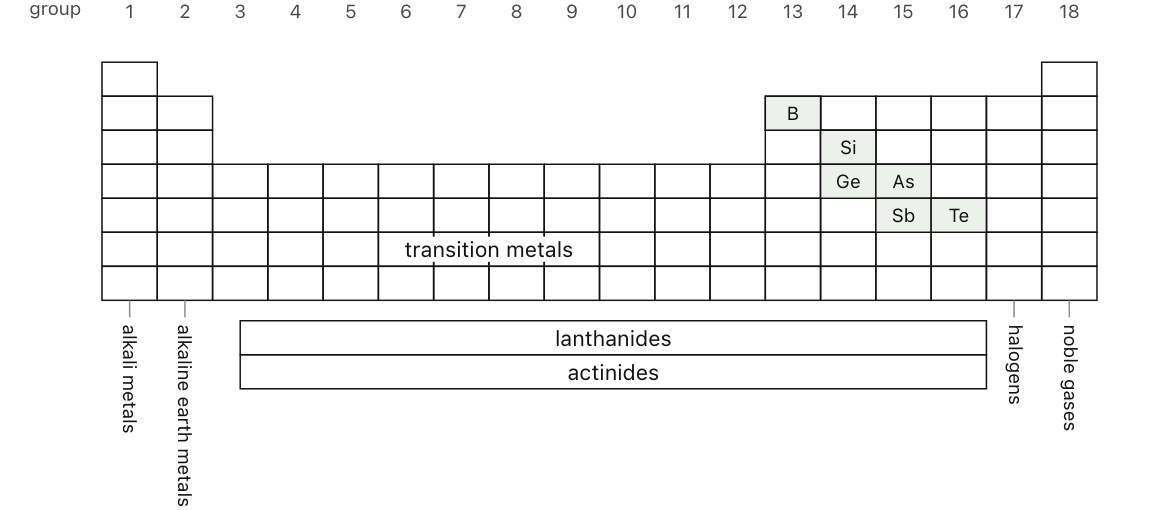
The periodic table by group, from Chapter 2
The periodic table by group

Electronic Structure

Helium was found on the Sun before it was found on Earth. In 1868 astronomers saw a yellow line in sunlight that matched no known element; it took another 27 years for anyone to isolate the gas here.

  • 3.1Light and the Electromagnetic Spectrum
  • 3.2The Bohr Model of Hydrogen
  • 3.3Quantum Numbers and Orbitals
  • 3.4Electron Configurations
  • 3.5Periodic Trends
  • 3.6Choosing the Method
9 of 70 questionsKotz Ch. 6–7Four practice sets
Preview Chapter 3 PDF · 4 pages
The s, p and d orbitals, from Chapter 3
The s, p and d orbitals

The Mole and Chemical Formulas

A tablespoon of water holds about 5 × 10²³ molecules. Counting them at one per second would take roughly a million times the age of the universe. So chemists do not count; they weigh.

  • 4.1The Mole and Avogadro’s Number
  • 4.2Molar Mass and the Conversion Map
  • 4.3Formulas as Mole Ratios
  • 4.4Percent Composition
  • 4.5Empirical and Molecular Formulas
  • 4.6Combustion Analysis and Hydrates
  • 4.7Choosing the Method
8 of 70 questionsKotz Ch. 2Four practice sets
Preview Chapter 4 PDF · 4 pages
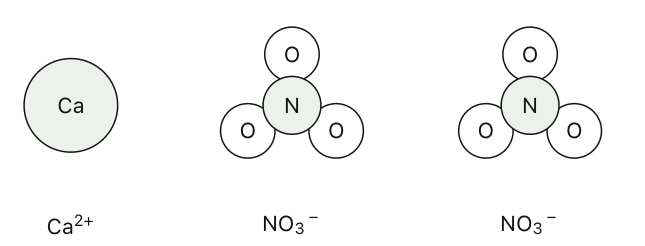
Counting the ions in Ca(NO₃)₂, from Chapter 4
Counting the ions in Ca(NO₃)₂

Stoichiometry

After an oxygen tank failed on Apollo 13, the crew had enough oxygen to get home; the danger was the carbon dioxide they were breathing out. How long that air lasts for three people is a calculation from the balanced equation.

  • 5.1Reading and Balancing Equations
  • 5.2Reaction Types
  • 5.3The Mole Road Map
  • 5.4Limiting Reactant
  • 5.5Particle Diagrams
  • 5.6Yield and Purity
  • 5.7Choosing the Method
8 of 70 questionsKotz Ch. 3–4Four practice sets
Preview Chapter 5 PDF · 4 pages
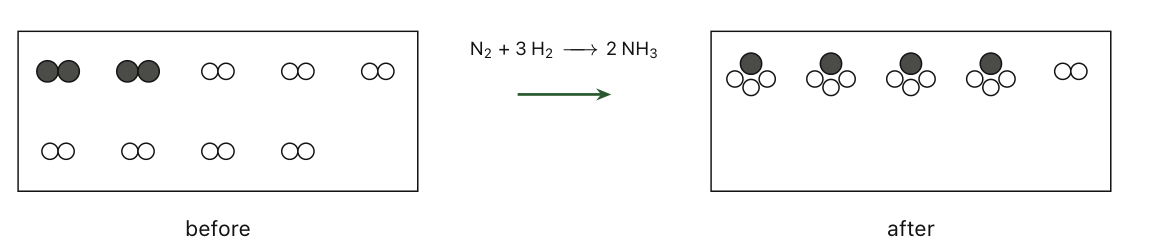
A limiting reactant, before and after, from Chapter 5
A limiting reactant, before and after

Solutions and Aqueous Reactions

Pure water is a poor conductor of electricity. What makes a bathtub dangerous is what is dissolved in the water: ions, which carry the current.

  • 6.1Molarity and Dilution
  • 6.2Electrolytes and Particulate Pictures
  • 6.3Precipitation and Net Ionic Equations
  • 6.4Acids, Bases, and Gas-Forming Reactions
  • 6.5Oxidation and Reduction
  • 6.6Solution Stoichiometry and Titration
  • 6.7Choosing the Method
9 of 70 questionsKotz Ch. 3–4Four practice sets
Preview Chapter 6 PDF · 4 pages
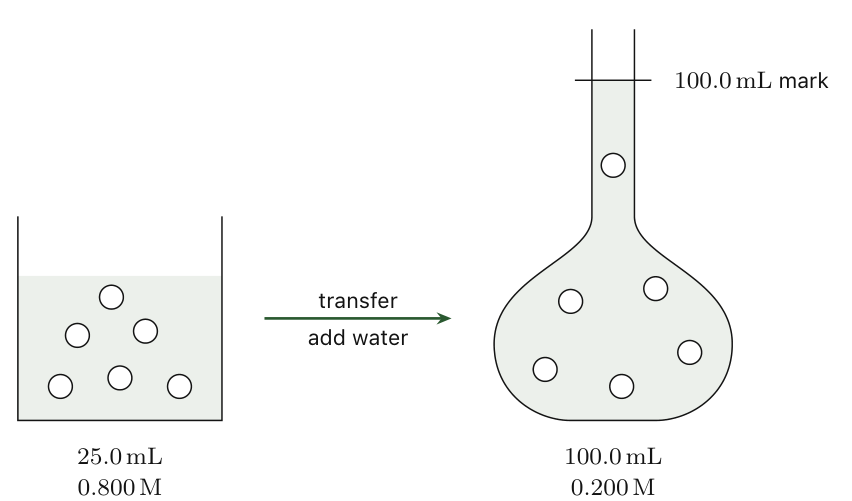
A dilution, 0.800 M to 0.200 M, from Chapter 6
A dilution, 0.800 M to 0.200 M

Heat and Enthalpy

A metal bench and a wooden bench that sat outside all night are at the same temperature, yet the metal one feels colder. Your hand is not reading temperature; it is reading how fast heat leaves you.

  • 7.1System and Surroundings
  • 7.2Internal Energy, Work, and the First Law
  • 7.3Heat Capacity and Thermal Equilibrium
  • 7.4Calorimetry
  • 7.5Enthalpy and Thermochemical Equations
  • 7.6Hess’s Law and Tabulated Enthalpies
  • 7.7Choosing the Method
8 of 70 questionsKotz Ch. 5Four practice sets
Preview Chapter 7 PDF · 4 pages
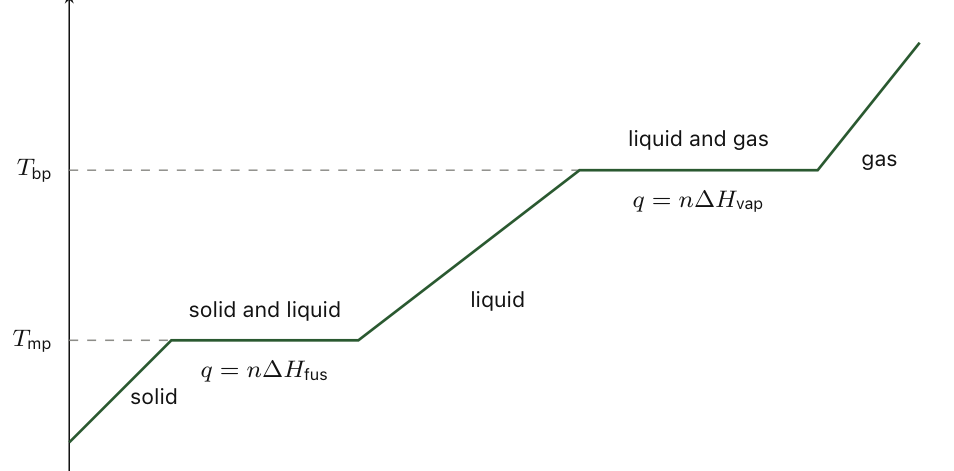
A heating curve, from Chapter 7
A heating curve

Structure and Bonding

A water molecule is bent, at about 104.5°. If it were straight, like carbon dioxide, the pull of its two bonds would cancel, and water would very likely be a gas at room temperature; there would be no oceans.

  • 8.1Ionic Bonds and Lattice Energy
  • 8.2Electronegativity and Bond Polarity
  • 8.3Lewis Structures
  • 8.4Formal Charge, Resonance, and Bond Order
  • 8.5Molecular Shape and Polarity
  • 8.6Valence Bond Theory and Hybridization
  • 8.7Molecular Orbital Theory
  • 8.8Choosing the Method
10 of 70 questionsKotz Ch. 8–9Four practice sets
Preview Chapter 8 PDF · 4 pages
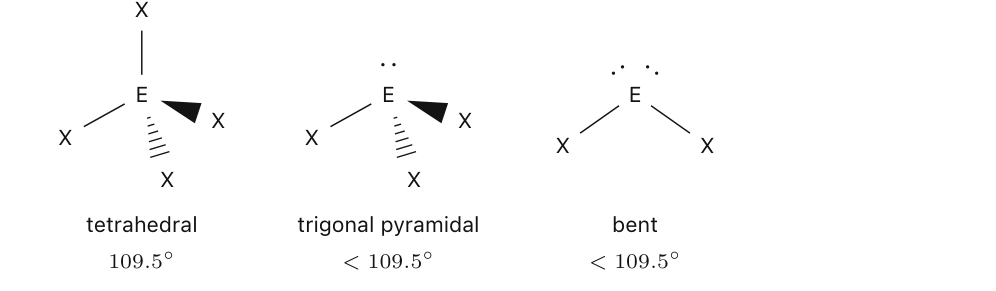
Four electron domains, with zero to two lone pairs, from Chapter 8
Four electron domains, with zero to two lone pairs

States of Matter

At the top of Mount Everest water boils near 70 °C. The water is the same; the air pressing down on it is about a third of what it is at sea level.

  • 9.1Pressure and the Gas Laws
  • 9.2The Ideal Gas Law
  • 9.3Gas Mixtures
  • 9.4Kinetic Theory and Real Gases
  • 9.5Intermolecular Forces
  • 9.6Phase Changes, Diagrams and Solids
  • 9.7Choosing the Method
6 of 70 questionsKotz Ch. 10–12Four practice sets
Preview Chapter 9 PDF · 4 pages
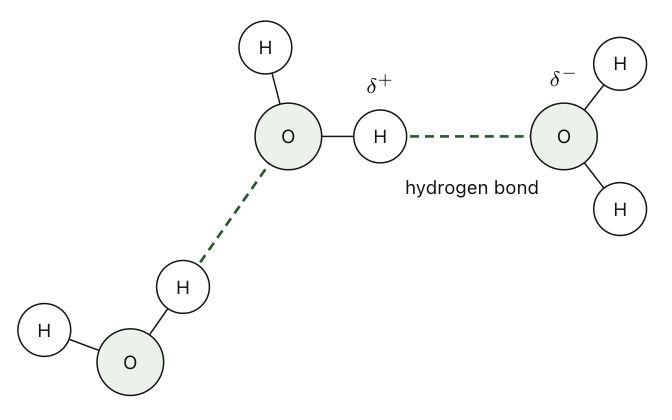
A hydrogen bond between water molecules, from Chapter 9
A hydrogen bond between water molecules

Take it in one sitting.

A mock exam of seventy original questions in the exam's proportions, a plan for the 110 minutes, the data sheet, an answer sheet and a score guide that tells you which chapters to revisit.

  • Time110 minutes for 70 questions, about 90 seconds each.
  • AllowedScratch paper, the data sheet and a non-graphing calculator. Nothing written in the booklet.
  • ScoringYour raw score out of 70. Nothing is subtracted for a wrong answer, so answer every question.
  • AfterAny chapter with less than about two thirds right is the first place to review.

Get the book

This review is the final part of my General Chemistry I book for CHEM 1211. The book has thirteen chapters in four exam parts, one for each midterm, and each part ends with its exam review and two mock exams. Chapter 13, Gases, is final exam material and comes with the whole book.

The whole book, one exam part, the practice with the mock exam, or the mock exam alone. Each opens in the Library to read page by page and to request as a PDF copy. The practice sets and the mock exam can be taken there too: each is timed, and when you check your answers it marks every question, shows the right letter and gives your score, by chapter for the mock exam. You pay by Zelle or Venmo, and I open the book as soon as your payment comes through, usually within a few hours.

  • The whole bookAll four exam parts, Chapter 13 on gases, and this full ACS final exam review.
    $79Get the whole book
  • Exam 1: Chapters 1 to 4How your exams are scored, Chapters 1 to 4 with worked examples, practice sets and worked solutions, and the Exam 1 Review with Mock Exams 1A and 1B and their solutions.
    $29Get the Exam 1 part
  • Exam 2: Chapters 5 to 7How your exams are scored, Chapters 5 to 7 with worked examples, practice sets and worked solutions, and the Exam 2 Review with Mock Exams 2A and 2B and their solutions. Also opens Section 4.7, combustion analysis, which Exam 2 tests.
    $29Get the Exam 2 part
  • Exam 3: Chapters 8 and 9How your exams are scored, Chapters 8 and 9 with worked examples, practice sets and worked solutions, and the Exam 3 Review with Mock Exams 3A and 3B and their solutions.
    $29Get the Exam 3 part
  • Exam 4: Chapters 10 to 12How your exams are scored, Chapters 10 to 12 with worked examples, practice sets and worked solutions, and the Exam 4 Review with Mock Exams 4A and 4B and their solutions.
    $29Get the Exam 4 part
  • Practice sets and the mock examFor the ACS final: every chapter’s three practice sets and review set, the data sheet and the mock exam. The concept sections and worked examples are not included.
    $39Get the practice
  • The mock examThe ACS final’s mock exam: seventy questions in 110 minutes, with the data sheet, an answer sheet, the score guide and the letter answers.
    $19Get the mock exam

Working one-on-one

I wrote this book. I tutor general chemistry one-on-one, in Athens and online, and every session is built around your own course: your professor’s exams, the errors you make most often, and a routine for working problems that holds up under time pressure.

The free molar mass calculator, moles to grams calculator, equation balancer and interactive periodic table work with the book.

Students who work with me get the book, and the full answer key with a worked solution for every question.

New to the course? The CHEM 1211 guide walks through it exam by exam, the guide to the CHEM 1211 ACS final explains how the exam counts, and the free readiness check shows which chapters to read first.

For one exam in particular, the CHEM 1211 Exam Intensive opens with a diagnostic exam and then runs three or five 90-minute sessions, on Zoom or in person in Athens. CHEM 1212 is by inquiry.

Set up a diagnostic session Or call (706) 389-0528